This new thematic group will explore ways to improve how the Common Agricultural Policy Strategic Plans are used to support a transition to more sustainable and competitive livestock systems.
January 29, 2026
On 27 January 2026, Euromontana, together with its member Auvergne-Rhône-Alpes (AURA), jointly hosted a meeting of representatives from mountain areas at the Region’s premises in Brussels.
The European Commission announced its Strategy for Generational Renewal in Agriculture on the 21 October, despite some positive points, Euromontana reiterates the need to strengthen financial support for generational renewal in the post-2027 Common Agricultural Policy
September 22, 2025
The European Parliament adopted its report on the future Common Agricultural Policy on 10 September, setting out its post-2027 vision for EU food and farming policies
Thirty years after its creation in Krakow, Euromontana returned to its birthplace to celebrate three decades of action for mountain areas, and to renew its commitment for the future of European mountains.
As the European Commission is preparing in 2025 a Strategy to boost generational renewal in the agricultural sector, Euromontana just released its position paper on how to meet the challenge of generational renewal in mountain agriculture.
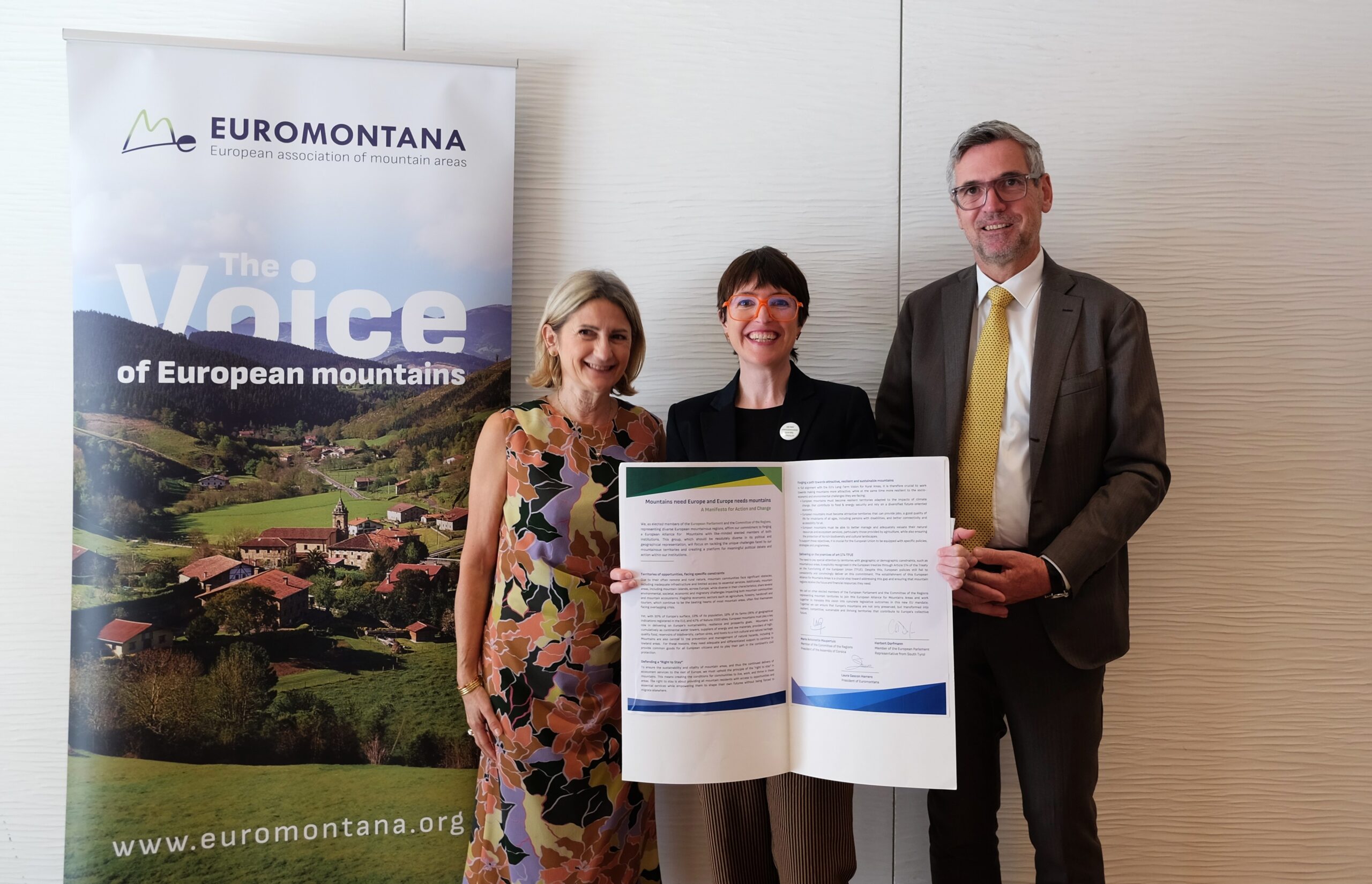
During a breakfast debate held on May 14, initiated by Marie Antoinette Maupertuis, member of the European Committee of the Regions (CoR), and Herbert Dorfmann, Member of the European Parliament, the European Alliance for Mountain Areas was officially launched.
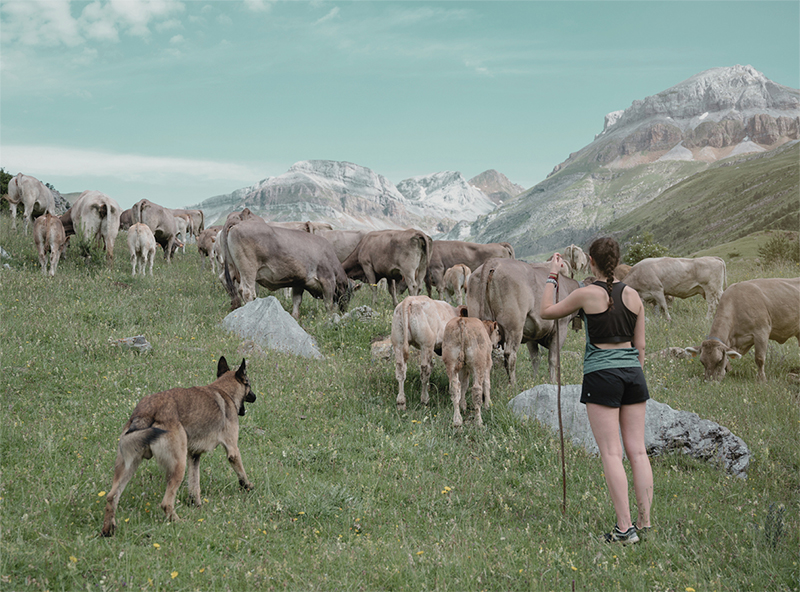
Euromontana has been selected together with 30 other European organisations to form the new European Board on Agriculture and Food (EBAF). We will be represented by Mario Grillo, 1st Vice-President of Euromontana, and will share the messages and demands of Europe’s mountains for better recognition and support of mountain farming!

The European Commission is collecting data on wolves and the impact of predation on livestock farming and on affected areas. Euromontana welcomes the European Commission’s approach but regrets the lack of clarity and standardisation of the data requested. There is also no clear policy agenda linked to this initiative besides an


