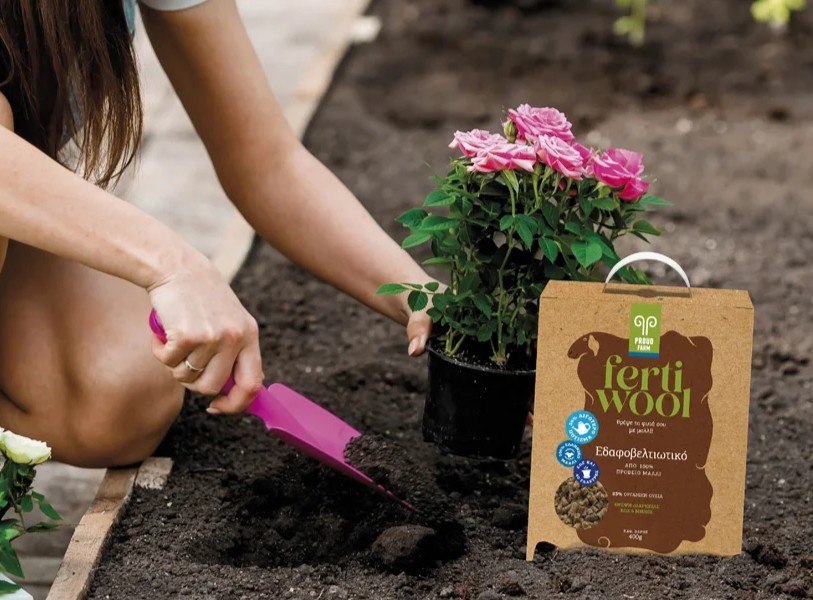
Fertiwool: from wool waste to a circular fertiliser in Crete
On the mountainous island of Crete, the Mediterranean Agrofood Competence Centre (MACC) has explored ways to improve on-farm circularity by finding a novel use for wool, as an alternative to it being treated as waste and burned or sent to landfill. Wool waste has been transformed into biodegradable, slow-release fertiliser pellets that can be used in all soil types and help retain water in the soil.
From waste to opportunity: how fertiwool solves an environmental problem
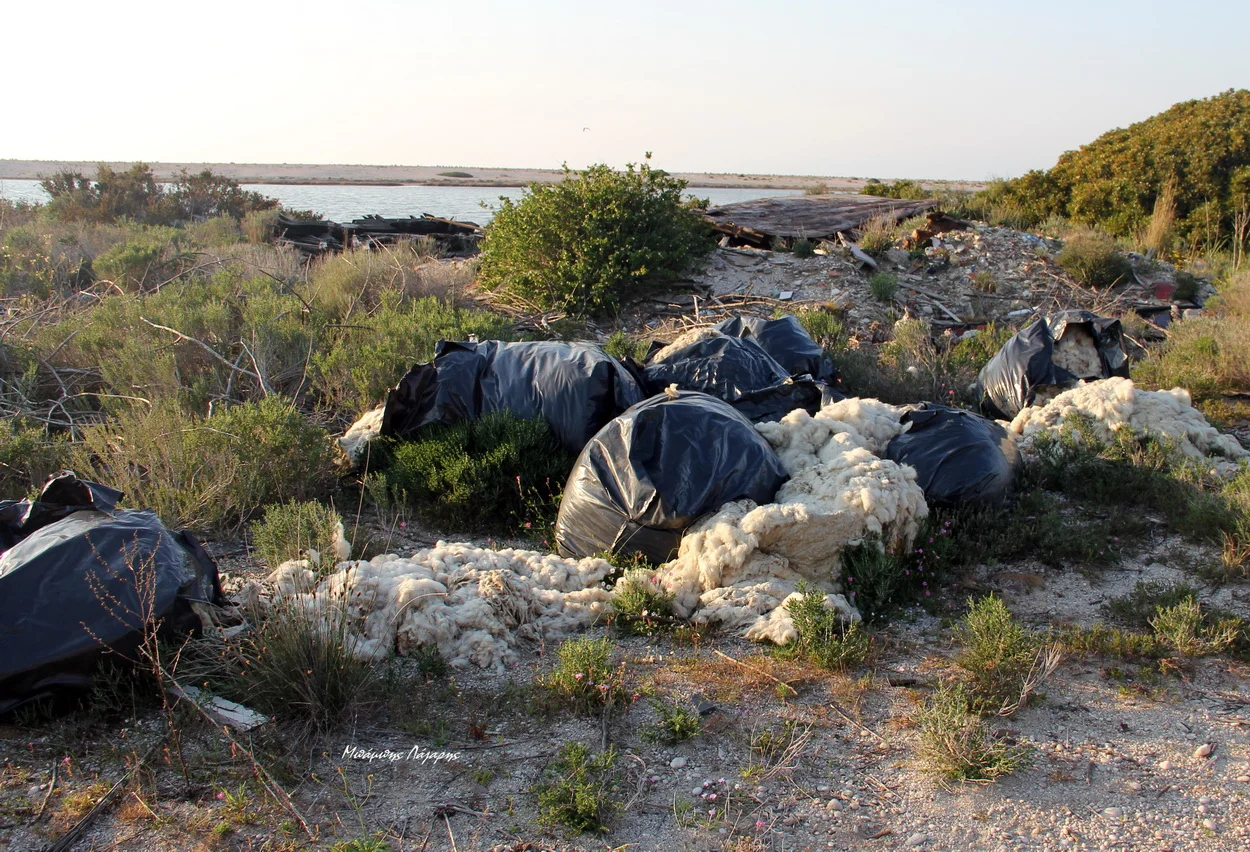
In Greece, and in other European countries, the wool from sheep shearing is a product that remains unused and often ends up in the garbage or simply burned. Open burning releases CO₂ and toxins, whilst the waste that is not burned ends up in landfill, which can pollute soil and water downstream. Not only is this a lost opportunity for sequestering carbon, but an additional income stream for sheep farmers was being lost. In many rural, island and mountain communities facing similar challenges to Crete, wool continues to be seen as a waste stream, which forgoes new value chain participation and additional income.
Fertiwool is both an environmental solution and a value chain opportunity. Rather than receiving no return on sheared wool, the farmer can process it, and market an additional product. Furthermore, lower quality products are upgraded, and a piece is added to the processing of products.
From collection to distribution: creating a sustainable value chain
In 2022, in collaboration with the Proud Farm Group of Farmers, the Mediterranean Agrofood Competence Centre first set about collecting unused wool gathered from sheep farmers across Greece. A key challenge was the high logistical costs involved, because transporting wool from dispersed farms raises the cost base considerably, particularly in remote areas. The next step is to process the raw wool, by shredding it and treating it via waste-processing technology. The processed product is then compressed into pellets, in a uniform shape, which can then be packaged. The finished product, a nutrient-rich combination of nitrogen, phosphorus, potassium, and trace elements essential for healthy crop development, is then distributed to growers for use across crops and soil types.
The collaboration resulted in the innovative Fertiwool fertilizer made from 100% Greek sheep wool, which is a unique product that can be used in any type of cultivation. From the initial measurements, the pellets are rich in nutrients and can retain water and swell, thus requiring less watering, which contributes a better soil structure. It normally requires just one application every six months as it releases its ingredients slowly, making it easy to use. It is also 100% biodegradable.
Reducing dependency, feeding the soil
Fertiwool therefore delivers a multi-dimensional agronomic advantage which addresses nutrient supply, water conservation, and soil health simultaneously. It supports water savings, as the wool fibres retain moisture in the soil, reducing irrigation requirements by up to 30% in certain contexts.
The slow-release nutrients are released gradually over up to 6 months, reducing leaching and improving uptake efficiency. The pellets are also 100% biodegradable and fully eco-friendly, with no synthetic residues and no chemical build-up in the soil over time.
In addition, the pellets improve nutrient bioavailability for plants, enhance microbial activity in the rhizosphere, and reduce the reliance on synthetic inputs. Support from regional authorities and subsidies can help with the logistical costs, meaning that Fertiwool could have a stronger competitive advantage versus conventional fertilisers, which have been affected by ongoing geopolitical challenges, price fluctuations and import restrictions.
This makes fertiwool is a compelling concept for contributing to the circular economy in mountain agriculture. However, there are still some structural barriers that must be addressed to unlock its full commercial potential at scale. Firstly, there is the animal disease risk, as biosecurity protocols are needed to prevent the transmission of pathogens via raw wool. Secondly there is price competition, as wool must remain competitive for small farmers against low-cost alternatives such as attapulgite (palygorskite). This means some farmers are reluctant to pay for the pellets. Other markets are being explored, such as selling to households for use in gardens. MACC is currently exploring the combination of wool pellets with biofertilisers (beneficial microbial inoculants) to create a next-generation product.