One million hectares burned in 2025: the EU responds with a new wildfire risk strategy
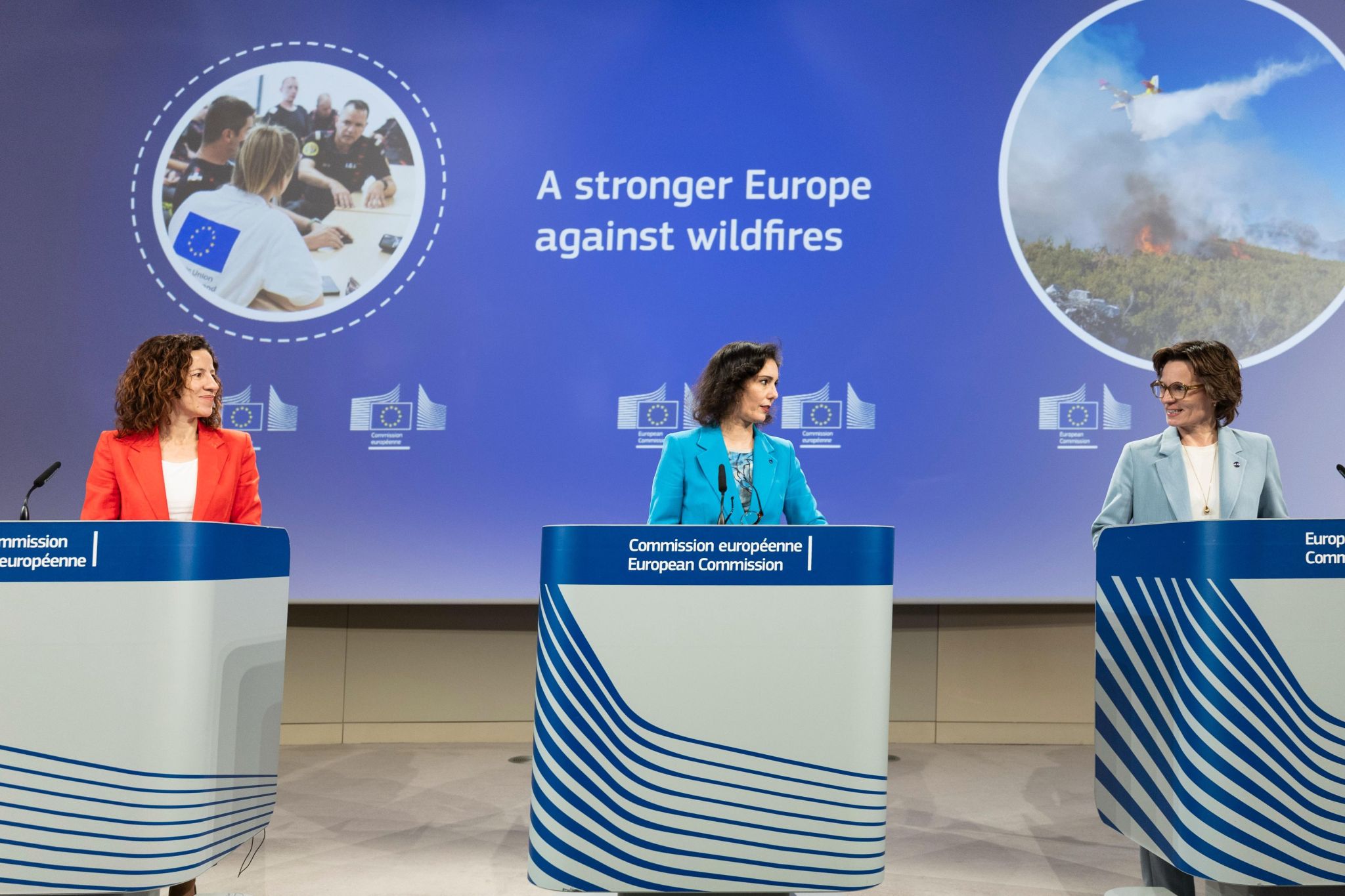
Euromontana welcomes the European Commission’s recent Communication on integrated wildfire risk management, launched on 25 March 2026. With 2025 being one of the most destructive years on record for wildfires in Europe, with over 1,034,000 hectares burned according to the Copernicus European Forest Fire Information System (EFFIS), the initiative provides a comprehensive framework for coordinated action. As the environmental, social and economic impacts of wildfires are severely felt in mountain areas, many of which are protected, the initiative offers concrete steps to address the increasing risks outlined by the European Environment Agency’s (EEA) 2024 European Climate Risk Assessment and the EEA’s 2025 State of Europe’s Environment report.
The strategy includes a variety of elements at EU and national level: steps on landscape management and restoration, support for prescribed burning, promotion of grazing and forestry to reduce wildfire risk, and enhancement of EFFIS for fuel mapping. It also opens further opportunities for research and innovation through the Horizon Europe programme, initiatives to raise community awareness through European Citizens Panels, an increased coordinated response across Europe, and support for post-fire recovery of communities and landscapes.
What impact will the strategy have on mountain areas?
The Communication outlines that the European Commission aims to continue funding for investment and land management-related prevention and restoration measures, adapted for the next Multiannual Financial Framework (MFF). This includes agri-environmental and climate actions, with the aim of rewarding farmers and forest holders for their positive efforts, putting special emphasis on supporting voluntary transition towards more resilient production systems, including extensive livestock systems. The strategy also covers support for voluntary commitments in natural and semi-natural areas, in particular mountain and marginal areas. The Commission also proposes to better target income support to farmers in need, including specific types of farming managing agricultural areas at risk of land abandonment.
In addition to targeted support, the Commission proposes to promote grazing, silvopasture and agroforestry through the upcoming Livestock Strategy, expected in June 2026, to reduce wildfire risk. This strong recognition of the role of traditional land management strategies such as pastoralism and extensive grazing in tackling wildfires is a positive step forward and can be a key component of an integrated approach to landscape management.
Synergies with the FIRE-RES project
The close alignment between the Commission’s Communication on integrated wildfire risk management and the approach developed within the FIRE-RES project, in which Euromontana participated as a partner, illustrates the importance of sustained investment in integrated wildfire risk management. FIRE-RES has helped to test and demonstrate approaches that are now reflected in the European policy agenda, reinforcing the relevance of integrated, cross-sectoral wildfire risk management and the value of continued collaboration at the European level.
Building on this experience, Euromontana welcomes the opportunity for the knowledge, tools, and networks developed through the FIRE-RES project to continue supporting the European Commission and Member States in the implementation of this strategy. Ensuring that these results remain accessible, transferable, and actionable will be key to strengthening Europe’s collective capacity to prevent and respond to increasingly devastating wildfires, particularly in mountain areas, where the stakes for communities, biodiversity and landscapes are highest.
© European Union 2026